



Key Takeaways:
-
Testosterone decline in endurance athletes over 40 is primarily driven by cellular energy deficits, micronutrient gaps, and sleep disruption—not just aging or overtraining.
-
Restoring energy availability, optimizing micronutrient intake, and improving sleep quality are the most effective natural interventions to support healthy testosterone levels and athletic performance.
-
Precision-grade supplements like Pürblack Live Resin® shilajit, when integrated with proper fueling and strength training, can measurably improve hormone levels, recovery, and resilience at the cellular level.
Energy is not a feeling. It is a cellular event. When chronic endurance training suppresses testosterone in athletes over 40, the problem starts at the mitochondrial level, not in your motivation.1 Most athletes chase stimulants when they should be restoring the upstream biology that powers hormone production.
The solution isn't more stimulation. Sustainable natural testosterone support for endurance athletes over 40 depends on fixing energy availability, sleep architecture, and micronutrient status first.2 This approach targets the mechanisms that actually drive performance decline, including how cellular regeneration products like Pürblack Live Resin® shilajit support energy-intensive hormone synthesis. Interventions that improve lab values also improve split times.
Discover precision-grade cellular support with Pürblack Live Resin® shilajit.3

Why Testosterone Falls After 40—And Why Endurance Training Can Accelerate It
Understanding what biological mechanisms drive testosterone decline in athletes past 40 requires looking beyond simple aging. The hypothalamic-pituitary-gonadal axis undergoes specific structural changes that reduce hormone production at multiple levels. When you add high-volume endurance training without proper recovery protocols, these age-related declines accelerate through distinct pathways that directly impact cellular energy production and recovery capacity.
Age Reduces Your Active Testosterone Despite Normal Lab Values
After 40, your body produces more sex hormone-binding globulin (SHBG), which binds testosterone and reduces the free, active portion available to your cells. Simultaneously, Leydig cells in the testes become less responsive to luteinizing hormone signals, even when LH levels remain normal. Research shows this cellular dysfunction stems from mitochondrial inefficiency, impaired cholesterol transport, and accumulated oxidative damage.4 Total testosterone may look acceptable on labs, but free testosterone drops significantly.
Energy Deficits Shut Down Hormone Production
Endurance athletes face a unique challenge: inadequate energy availability suppresses the entire reproductive hormone cascade. When you consistently consume fewer calories than your training demands, cortisol rises and directly inhibits GnRH release from the hypothalamus. Studies demonstrate that long-term endurance athletes show 25-35% lower testosterone levels compared to sedentary peers.5 This isn't overtraining syndrome. It's metabolic prioritization where reproduction takes a backseat to immediate survival demands. Managing cortisol through targeted adaptogens becomes essential for maintaining hormonal balance.6
Sleep Loss Amplifies Testosterone Decline After 40
Sleep restriction hits testosterone production harder in men over 40 than in younger athletes. Clinical evidence shows that one week of sleep restriction (5 hours per night) reduces daytime testosterone by 10-15% in older men, while simultaneously elevating late-afternoon cortisol.7 Poor sleep disrupts the normal pulsatile release of LH, which is essential for maintaining Leydig cell function. Recovery isn't just about muscle repair—it's about preserving the hormonal environment that drives adaptation.
Micronutrient Gaps Block Hormone Synthesis
Testosterone production requires specific cofactors that endurance athletes commonly lack. Low ferritin impairs oxygen transport and cellular energy production needed for steroidogenesis. Zinc deficiency directly reduces 5α-reductase activity. Vitamin D insufficiency correlates with lower free testosterone levels. These aren't optional optimizations—they're biological requirements for hormone synthesis. Precision dosing of cellular regeneration compounds can address these deficiencies while supporting the mitochondrial efficiency needed to reverse SHBG elevation, restore energy availability, and optimize sleep architecture.8 The solution isn't managing decline—it's restoring the cellular foundation that makes hormone production possible.
Natural Interventions That Move Labs and Split Times
Energy availability drives testosterone production more than any supplement stack. Fix the fundamentals first. The interventions that actually shift testosterone levels and recovery metrics target the biological mechanisms at their source, with measurable outcomes you can track in both lab work and training logs.
-
Fix energy availability first. Target 30-45 kcal/kg fat-free mass daily with 1.6-2.2 g/kg protein.9 Under-fueling below 30 kcal/kg suppresses testosterone production faster than any other single factor. Research shows that low energy availability directly correlates with reduced metabolic rate, suppressed thyroid function, and lower sex hormones in endurance athletes.10
-
Program strength training with precision. Add 2-3 weekly sessions of heavy compound movements: 3-5 sets of 3-6 reps at 80-90% 1RM. Evidence demonstrates this preserves lean mass, supports anabolic signaling, and reduces injury risk when combined with endurance work.11 Skip the high-rep, low-load circuits that add fatigue without hormonal benefit.
-
Optimize micronutrients and sleep architecture before any booster. Get vitamin D above 40 ng/mL, zinc at 11-15 mg daily, magnesium at 400-420 mg, and ferritin between 75-125 ng/mL for athletes. Pair this with 7.5-8.5 hours of sleep and an 18-minute wind-down routine (no screens, controlled breathing, room temperature below 68°F). These interventions consistently outperform stimulant-based boosters on measurable testosterone and recovery markers.
-
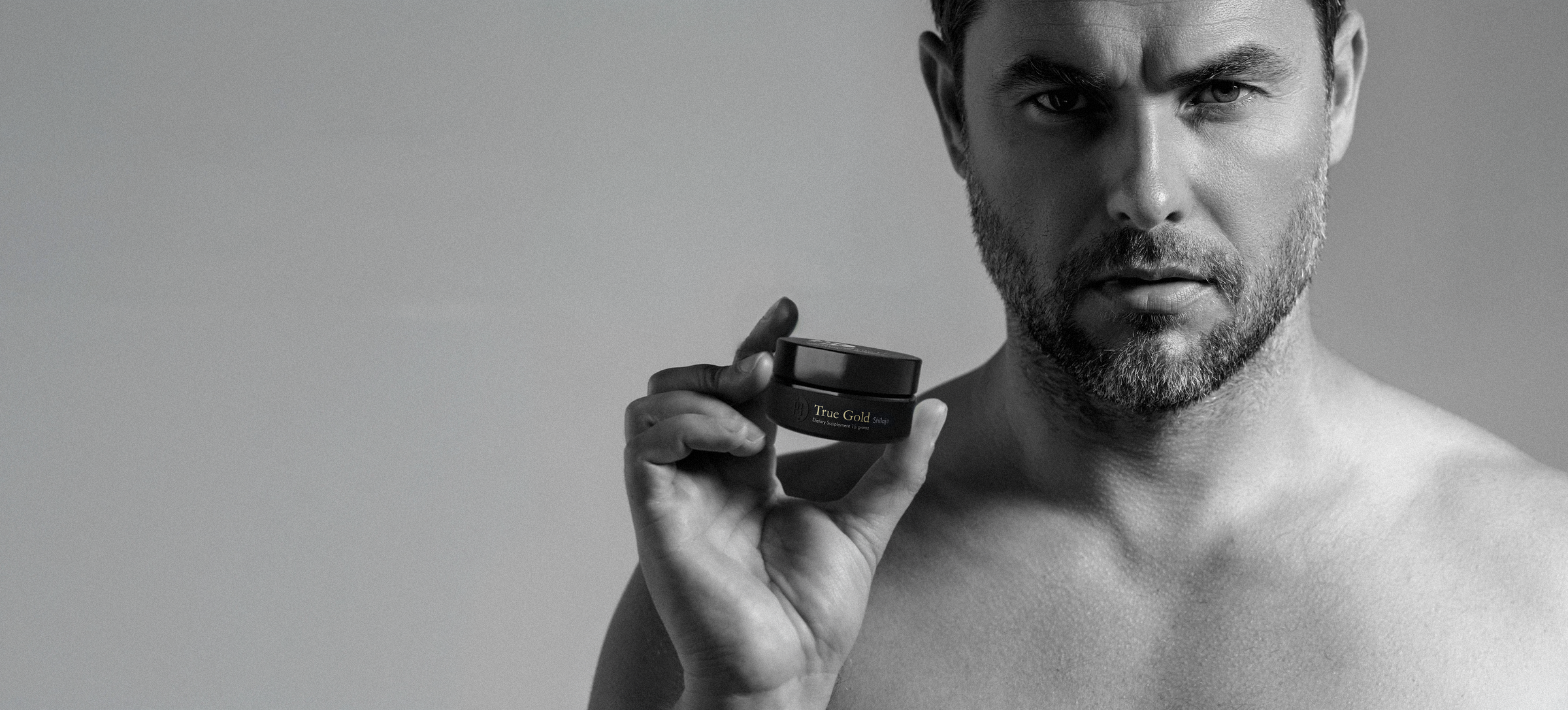
Consider precision-grade mineral support.12 Products like True Gold shilajit resin deliver fulvic acids and trace minerals that support cellular energy production and nutrient transport.13 Take 250-500 mg on an empty stomach each morning, cycling 1-2 days off weekly to maintain effectiveness.
Cellular Regeneration, Mitochondria, and Hormone Signaling—Where Pürblack® Fits
Testosterone synthesis requires significant cellular energy, relying on mitochondrial ATP and micronutrients like zinc and vitamin D. Fulvic acid enhances nutrient transport and energy production, supporting steroidogenesis. Clinical research shows that purified shilajit at 250 mg twice daily can significantly increase testosterone in men aged 45-55 over 90 days.
Pürblack engineers Live Resin® shilajit using low-temperature processing to preserve bioactive compounds. This supports energy availability and resilience for endurance athletes over 40 without stimulants.
For effective integration, take 250-500 mg of shilajit resin each morning on an empty stomach, increasing to 1,000 mg during high-stress training. Combine with adequate protein and strength training, cycling 1-2 days off weekly. Reassess key biomarkers at 8-12 weeks to track improvements in hormonal and metabolic function.
From Maintenance to Optimization: Your Next Steps
Sustainable testosterone restoration after 40 requires precision, not guesswork. Clinical evidence shows purified shilajit at 500mg daily increases total and free testosterone in middle-aged men within 90 days.20 This evidence supports a structured approach: weeks 1-4 fix energy availability and sleep architecture, weeks 5-8 add targeted strength work, weeks 9-12 optimize micronutrients and retest labs.
Your natural testosterone support plan for endurance athletes over 40 starts with cellular regeneration.21 Take 250-500mg of Live Resin® shilajit each morning on an empty stomach, cycling 1-2 days off weekly for sustained effectiveness.22 Pair this with adequate fueling and strategic strength sessions to restore the energy output and recovery capacity that declining hormones have compromised.
References
-
1 Chronic Endurance Training and Testosterone — PMC Article PMC5988228. National Library of Medicine. https://pmc.ncbi.nlm.nih.gov/articles/PMC5988228/
-
2 Shilajit Dosage Guide — Pürblack Blog. https://purblack.com/blogs/blog/shilajit-dosage
-
3 Pürblack Live Resin® Shilajit Collection. https://purblack.com/collections/shilajit
-
4 Leydig Cell Dysfunction and Mitochondrial Insufficiency — PMC Article PMC11562514. National Library of Medicine. https://pmc.ncbi.nlm.nih.gov/articles/PMC11562514/
-
5 Testosterone Levels in Endurance Athletes — Frontiers in Endocrinology. https://www.frontiersin.org/articles/10.3389/fendo.2020.00011/full
-
6 Shilajit and Ashwagandha for Cortisol Management — Pürblack Blog. https://purblack.com/blogs/blog/shilajit-ashwaganda
-
7 Sleep Restriction and Testosterone in Older Men — PMC Article PMC9510302. National Library of Medicine. https://pmc.ncbi.nlm.nih.gov/articles/PMC9510302/
-
8 Shilajit Dosage and Cellular Regeneration — Pürblack Blog. https://purblack.com/blogs/blog/shilajit-dosage
-
9 Energy Availability and Hormonal Health in Athletes — PMC Article PMC10388605. National Library of Medicine. https://pmc.ncbi.nlm.nih.gov/articles/PMC10388605/
-
10 Low Energy Availability and Sex Hormones in Endurance Athletes — BMJ Open Sport & Exercise Medicine. https://bmjopensem.bmj.com/content/10/4/e002193
-
11 Resistance Training for Older Adults: Position Statement — Journal of Strength and Conditioning Research. https://journals.lww.com/nsca-jscr/fulltext/2019/08000/resistance_training_for_older_adults__position.1.aspx
-
12 Pürblack Live Resin® Shilajit Collection. https://purblack.com/collections/shilajit
-
13 True Gold Shilajit Resin (30g) — Pürblack Product Page. https://purblack.com/products/true-gold-shilajit-30g
-
14 Clinical Guidelines for Testosterone Testing — Journal of Clinical Endocrinology & Metabolism. https://academic.oup.com/jcem/article/103/5/1715/4939465
-
15 Purified Shilajit and Testosterone in Middle-Aged Men — PubMed. https://pubmed.ncbi.nlm.nih.gov/26395129/
-
16 Shilajit Dosage Guide — Pürblack Blog. https://purblack.com/blogs/blog/shilajit-dosage
-
17 How to Consume Shilajit — Pürblack Blog. https://purblack.com/blogs/blog/how-to-consume-shilajit
-
18 Energy Availability and Hormonal Health in Athletes — PMC Article PMC10388605. National Library of Medicine. https://pmc.ncbi.nlm.nih.gov/articles/PMC10388605/
-
19 Shilajit Health Benefits and Fulvic Acid Matrix — Pürblack Blog. https://purblack.com/blogs/blog/shilajit-health-benefits
-
20 Purified Shilajit and Testosterone in Middle-Aged Men — PubMed. https://pubmed.ncbi.nlm.nih.gov/26395129/
-
21 What Is Shilajit Resin? — Pürblack Blog. https://purblack.com/blogs/blog/what-is-shilajit-resin
-
22 Shilajit Dosage Guide — Pürblack Blog. https://purblack.com/blogs/blog/shilajit-dosage


